
Troubleshooting
Above-Ground Pool Losing Water? How to Find the Leak
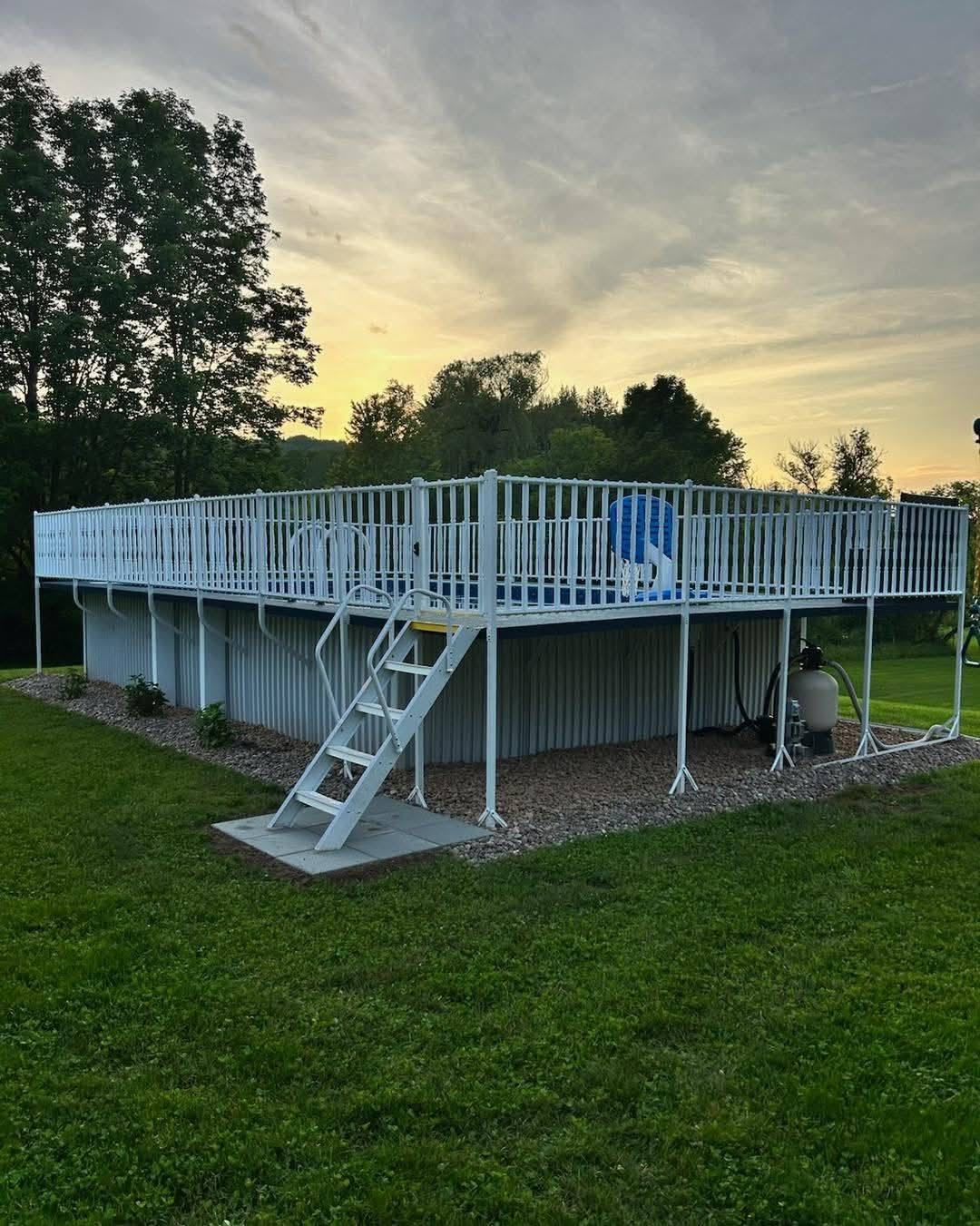
An above-ground pool losing water is either evaporating, splashing out, or leaking, and the difference matters. A real leak wastes water and chemicals, and worse, it soaks the ground under the pool and puts the base at risk. You can narrow the cause down yourself in about a day.
First, figure out if it is even a leak
Some water loss is completely normal. Sun, wind, and dry air pull water out of an uncovered pool every single day, and heavy swimming afternoons splash out more than people think.
The bucket test settles it. Do it once and you stop guessing.
- Fill a bucket about three quarters with pool water and set it on a step or a weighted spot in the shallow area so it floats level or sits stable.
- Mark the water level inside the bucket and the pool level outside it.
- Leave the pump running normally and do not swim for 24 hours.
- Compare the two marks. If both dropped about the same, that is evaporation. If the pool dropped more, you have a leak.
Skip the test on a windy or rainy day. Both throw the results off.
Where the water stops tells you where the leak is
Let the pool find its own level with the pump off, then note where it settles. Water stops falling at the height of the hole.
| Level stops at | Most likely cause | What to check |
|---|---|---|
| The skimmer opening | Skimmer faceplate, gasket, or a crack in the skimmer | The gasket and screws around the skimmer, and the housing itself |
| The return fitting | Return gasket or a loose eyeball fitting | The gasket behind the faceplate and the fitting threads |
| Partway down the wall | A hole or seam issue in the liner at that height | Run your hand along that band of liner looking for a tear |
| Just above the floor | Liner damage low on the wall or at the cove | The bottom seam and the area behind the ladder |
| Only when the pump runs | Pressure-side plumbing or equipment | Hoses, clamps, filter, pump seals, heater connections |
| Only when the pump is off | Suction-side plumbing | Skimmer line and suction hose connections |
That last pair is the trick most homeowners have never heard. Note whether the loss changes with the pump and you have already cut the possibilities in half.
Simple checks you can run today
Before anyone opens the wall or drains anything, work through the easy stuff. A large share of above-ground pool leaks live at the equipment pad or the fittings, not in the liner.
- Walk the equipment pad while the pump is running and look for drips at every hose clamp, union, and the pump seal.
- Feel the ground under the filter and pump. Wet ground on a dry day is your answer.
- Check the skimmer and return faceplates for loose screws or a cracked plastic housing.
- Look for the soggy patch outside the pool wall, which often sits right below the leak.
- With the pump off, put a couple of drops of dye near a suspect spot and watch whether it gets pulled in.
- Inspect the liner behind and under the ladder, which is the most common tear location on an above-ground pool.
How much loss is too much
If you are topping off far more often than you used to, treat it as a leak until the bucket test says otherwise. Sudden changes matter more than the absolute number.
Why you should not wait on this
Leaking water goes somewhere, and with an above-ground pool it goes straight into the base. Saturated sand washes out, the ground under the bottom track settles, and the pool starts to sit off level.
Once the pool is out of level, the walls and the liner carry uneven load. That is when a small repair becomes a releveling job and sometimes a new liner.
Chronic wet ground also undermines deck footings and attracts the freeze and thaw damage that a Massachusetts winter is happy to provide. Our guide to backyard drainage around a pool covers how to protect the base once the leak is fixed.
Which repairs are DIY and which are not
A small pinhole above the waterline is a patch kit and ten minutes. A tear at a seam, a cracked skimmer, or anything low on the wall is a call.
| Problem | Do it yourself? | Why |
|---|---|---|
| Small pinhole in the liner | Usually yes | A wet patch kit handles it if the liner is otherwise healthy |
| Loose hose clamp or fitting | Yes | Tighten or replace, no special tools |
| Skimmer or return gasket | Sometimes | Needs the water dropped and the faceplate resealed correctly |
| Tear at a seam or under the ladder | No | Patches rarely hold on a seam under load |
| Cracked skimmer housing | No | Requires draining below the skimmer and proper resealing |
| Old, brittle, or shrinking liner | No | Patching a failing liner just moves the next leak a few feet |
If the liner is aging out, patching is a stopgap. Our post on signs your pool liner needs replacing will tell you which side of that line you are on.
Get it looked at
We do leak diagnosis, liner replacement, fitting repairs, and equipment work under swimming pool sales, service, and installation, and we bring the base and the deck back to level when the ground has already moved.
Text or call us a photo of the water line and the wet spot at (508) 558-5199. We serve East Taunton and homeowners across Plymouth County and the rest of southeastern Massachusetts, and we can usually tell you a lot from a picture before we ever pull in the driveway.
Frequently asked questions
How much water loss is normal for an above-ground pool?
Uncovered pools lose water to evaporation every day, and more on hot, dry, windy stretches. The number matters less than the change. If you are refilling noticeably more than you did last month, run the bucket test.
Does a solar cover reduce water loss?
Yes, significantly. A cover cuts evaporation and holds heat, which is why a covered pool often seems to stop leaking overnight. It also makes leak testing more accurate because evaporation stops muddying the numbers.
Can I find a leak with food coloring?
Leak dye or a drop of food coloring works when the pump is off and the water is still. Release it slowly near the suspect area and watch whether it gets drawn toward a spot. Wait for calm water or you will just watch it swirl.
Should I drain the pool to find the leak?
No. Never drain an above-ground pool to hunt for a leak. An empty pool can shift, float, or collapse, and you can locate almost every leak with the water in place.
Can you repair a leak, or do I need a whole new liner?
It depends on the liner's age and where the hole is. Healthy liners take patches well. Brittle, faded, or shrinking liners usually need replacement, and we will tell you straight which one you have.
Looking for design-build contracting in East Taunton or anywhere across Massachusetts? Learn more about our design-build contracting service or get in touch directly.
Ready to build your backyard?
Tell us about your pool, deck, or patio project.